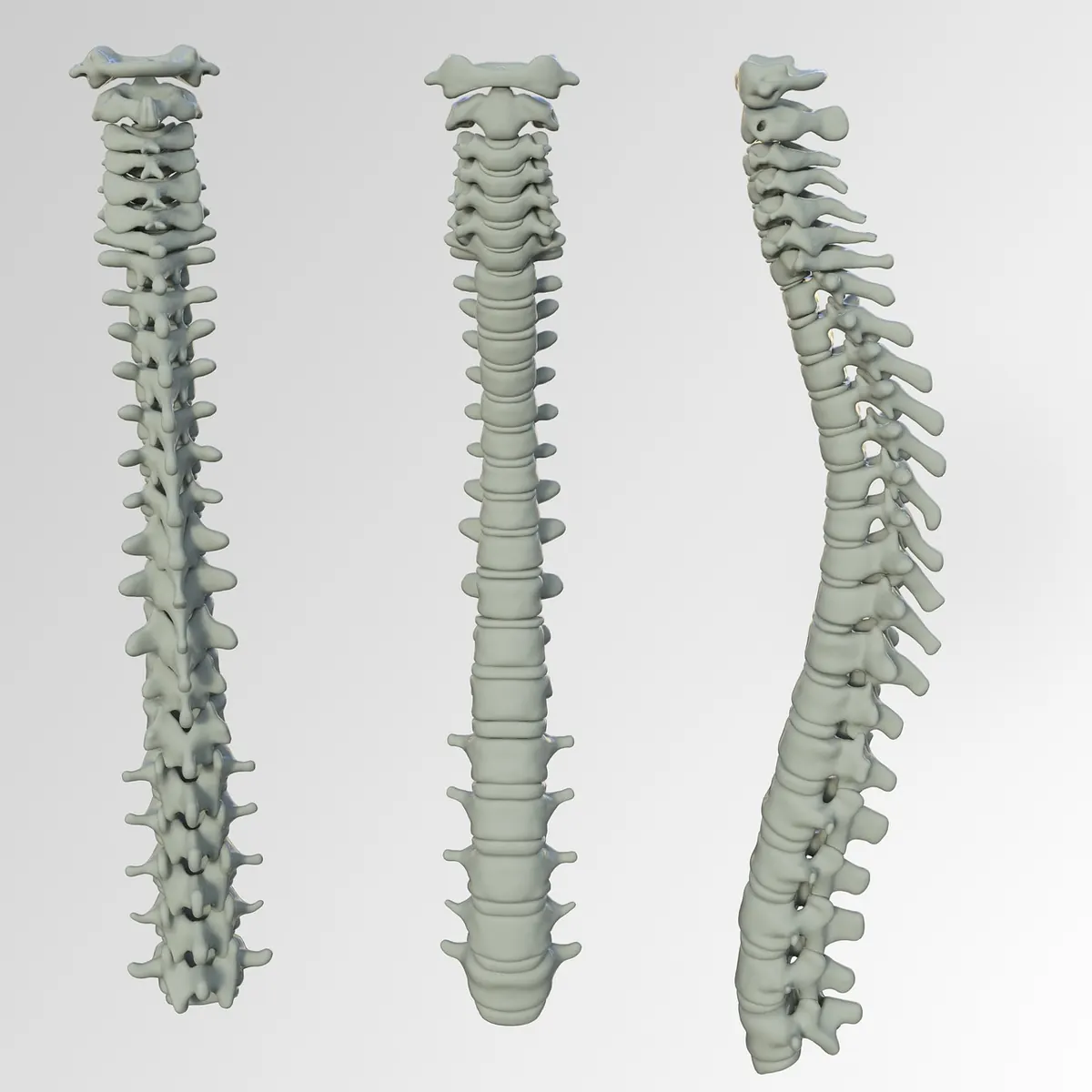
If your first movement of the day is a cautious shuffle towards the kettle, you are in good company. Most backs are at their stiffest first thing in the morning. Overnight the discs in your spine absorb fluid and swell slightly, the muscles and ligaments around them cool down, and several hours of near-stillness leave everything feeling reluctant. That is not a sign of damage. It is usually a sign that your spine needs waking up properly — gently, and in the right order. The routine below takes around ten minutes, needs nothing more than a mat or a folded towel, and is designed to be done before you shower, eat or reach for your phone.
Why mornings feel stiffest
During the night, the discs between your vertebrae rehydrate. They become slightly taller and more pressurised, which is why bending forward to put on socks at seven in the morning can feel harder than the same movement at five in the afternoon. Add a mattress that holds you in one position and a bedroom that is cooler than your living room, and you have a back that wants to move but has not been asked to yet.
Gentle movement disperses that fluid and brings blood flow back to the surrounding tissues. Aggressive stretching first thing, on the other hand, tends to meet resistance. The aim of this routine is to move within comfort and let range return on its own, rather than chasing a stretch and forcing it.
Before you start
Two minutes of preparation makes the rest of the routine noticeably easier.
- Warm the surface, not the muscles. A rug, a yoga mat or a thick towel on a carpeted floor is fine. Bare floorboards are not.
- Breathe out into the movement. If you catch yourself holding your breath, you have gone too far or too fast.
- Never push into pain. A mild pulling sensation is acceptable. Sharp, pinching or radiating pain is your signal to stop and reduce the range.
- Check with a professional first if you need to. If you have a diagnosed spinal condition, have had recent surgery or an injury, or have pain travelling down a leg, speak to your GP or a physiotherapist before starting.
The routine, step by step
Work through the moves in order. The sequence starts with the lower back, moves up through the mid-back, and finishes standing, which is how you want to begin your day.
1. Breathing and pelvic tilts (1 minute)
Lie on your back with your knees bent, feet flat and hip-width apart. Rest one hand on your lower ribs and the other on your belly. Breathe in through your nose for a count of four, feeling the ribcage widen, then out slowly for six. After four or five breaths, add gentle pelvic tilts: as you exhale, press your lower back softly into the floor, then release. Rock slowly, roughly one tilt every two seconds.
2. Knee rocks (1 minute)
In the same position, let both knees fall slowly to the right, pause, return through the middle, then let them fall to the left. Keep both shoulders on the floor and let the movement come from your hips and lower back rather than your waist twisting. If it feels sharp, reduce how far the knees travel.
3. Cat–cow (2 minutes)
Come onto your hands and knees, hands under shoulders, knees under hips. Exhale as you round your spine and tuck your chin towards your chest; inhale as you drop your belly, lift your chest and look slightly forward. Move slowly enough that each part of the spine takes a turn — the motion should start in the pelvis and travel upwards to the neck, then back down again. Eight to ten slow rounds is plenty.
4. Thread the needle (1 minute each side)
From hands and knees, slide your right arm under your body, palm facing up, and let your right shoulder and ear rest on the floor. Keep your hips high and your left hand planted for support. Breathe slowly, then come back and swap sides. This restores rotation through the mid-back, which is where a lot of morning tightness sits — especially if you spend your working day at a desk.
5. Child's pose with a side reach (1 minute)
Kneel and sit back towards your heels, arms stretched out in front. Walk both hands over to the left, feeling a stretch along the right side of your back and ribs. Hold for three or four breaths, then walk the hands over to the right. If your knees complain, sit on a cushion or rest your forearms on a chair seat instead.
6. Figure-four glute stretch (1 minute)
Lie on your back with knees bent. Cross your right ankle over your left knee, reach through and hold behind your left thigh, and draw it gently towards you until you feel it in the right buttock. Hold for thirty seconds, then swap. Tight glutes pull on the pelvis and make the lower back work harder than it needs to, so this one earns its place.
7. Standing extension and wall angels (1–2 minutes)
Stand up with your feet hip-width apart and place your hands on your lower back, fingers pointing down. Lean back gently a few centimetres, keeping your neck relaxed, then return to neutral. Repeat three or four times. Finish with wall angels: stand with your back to a wall, arms bent at ninety degrees, and slide them up and down as far as your shoulders allow without your ribs flaring or your back arching away from the wall.
Two mistakes that undo the good work
- Rushing the first two moves. The breathing and the knee rocks are not a warm-up for something more important. They are the part that tells your nervous system it is safe to move.
- Going back to bed afterwards. Ten minutes of movement followed by thirty minutes under the duvet will leave you exactly where you started, and often stiffer. Stay up, or sit upright with a cup of tea.
When to get advice instead
Stiffness that eases within half an hour of moving is normal and usually responds well to a routine like this. Speak to your GP or a physiotherapist if stiffness regularly lasts more than an hour, if it has been getting worse over several weeks, or if you notice numbness, tingling or weakness in a leg. Seek urgent medical help for severe pain after an accident, or for any change in bladder or bowel control alongside back pain.
Making it stick
Ten minutes sounds easy until the alarm goes off. Lay your mat out the night before, and treat the routine as part of getting up rather than an extra task bolted onto the morning. Doing it five days a week beats a heroic forty-minute session once a fortnight, and most people notice a difference in how easily they bend and turn within two or three weeks. If ten minutes is too much some mornings, do the pelvic tilts, cat–cow and the standing extension — three minutes is far better than nothing. Your back responds to regularity, not intensity.
Photo: jeviniya / Pixabay